Website Design & Development
Eleven Clinics, Two Languages: A Bilingual Community Health Center Website for Nuestra Clinica del Valle
November 10, 2026 · 10 min read · David Winters
Community health centers serve a lot of people who would rather read in a language other than English. In its October 2026 analysis of health center data, KFF found that 27% of health center patients nationwide, about 8.8 million people, were best served in a language other than English in 2025. For those patients, a website that only works in English sends them to the phone for answers the site could have given them, like which clinic is closest, when it's open, and whether they can afford a visit.
Accessibility is moving up the list, too. Under the Department of Health and Human Services' updated Section 504 rule, organizations that receive HHS funding must make their websites and mobile apps meet the Web Content Accessibility Guidelines (WCAG) 2.1 at Level AA, the most widely used standard for making sites usable by people with disabilities. An interim final rule published in May 2026 moved the deadline to May 11, 2027 for recipients with 15 or more employees. Most federally funded health centers fall under that rule, and the 2026 WebAIM Million report shows how much work remains across the web: automated testing found accessibility failures on 95.9% of the top million home pages.
Nuestra Clinica del Valle (NCDV) is a Federally Qualified Health Center, a community health center that receives federal funding to care for everyone who walks in, whether or not they have insurance. It started in 1971 as the Migrant Program of the local health department, opened to all residents of Hidalgo and Starr Counties in 1978, and today runs 11 clinics in nine Rio Grande Valley communities, from Roma and Rio Grande City to San Juan, Mission and Mercedes. NCDV's new website went live on October 26. MPC Studios also built the health center's previous website, which served NCDV from 2013.
The 2013 site had grown with the health center for more than a decade. It held announcements going back years, a page for each clinic, a list of services and a directory of providers, and it was written for desktop computers in English, with the federal liability notice in both languages at the bottom of each page. Since then, most of NCDV's visitors have moved to their phones, many of them on older Android devices and limited data plans, and the people the health center serves are predominantly Spanish-speaking. The new site had to keep the search traffic the old one had earned, work just as well in Spanish as in English, and answer the questions patients ask before their first visit.
A Spanish twin for every page
The defining decision on this project was to build the whole site twice, once in English and once in Spanish, as matching pages with their own addresses. English pages live at the root of the site, and every one of them has a Spanish counterpart under /es with a translated web address, so the San Juan Clinic page at /locations/san-juan-clinic pairs with /es/ubicaciones/clinica-san-juan. Each language has 99 pages, and the sitemap lists all 198.
The Español link at the top of every page takes visitors to the same page in Spanish, so a patient reading about dental care stays on dental care when they switch. The site never redirects anyone based on their browser's language settings, because that guesses wrong on shared computers at libraries and community centers and can keep search engines from indexing the English pages. When a browser reports that it prefers Spanish, an English page shows a small banner, "Este sitio también está disponible en español," which visitors can dismiss.
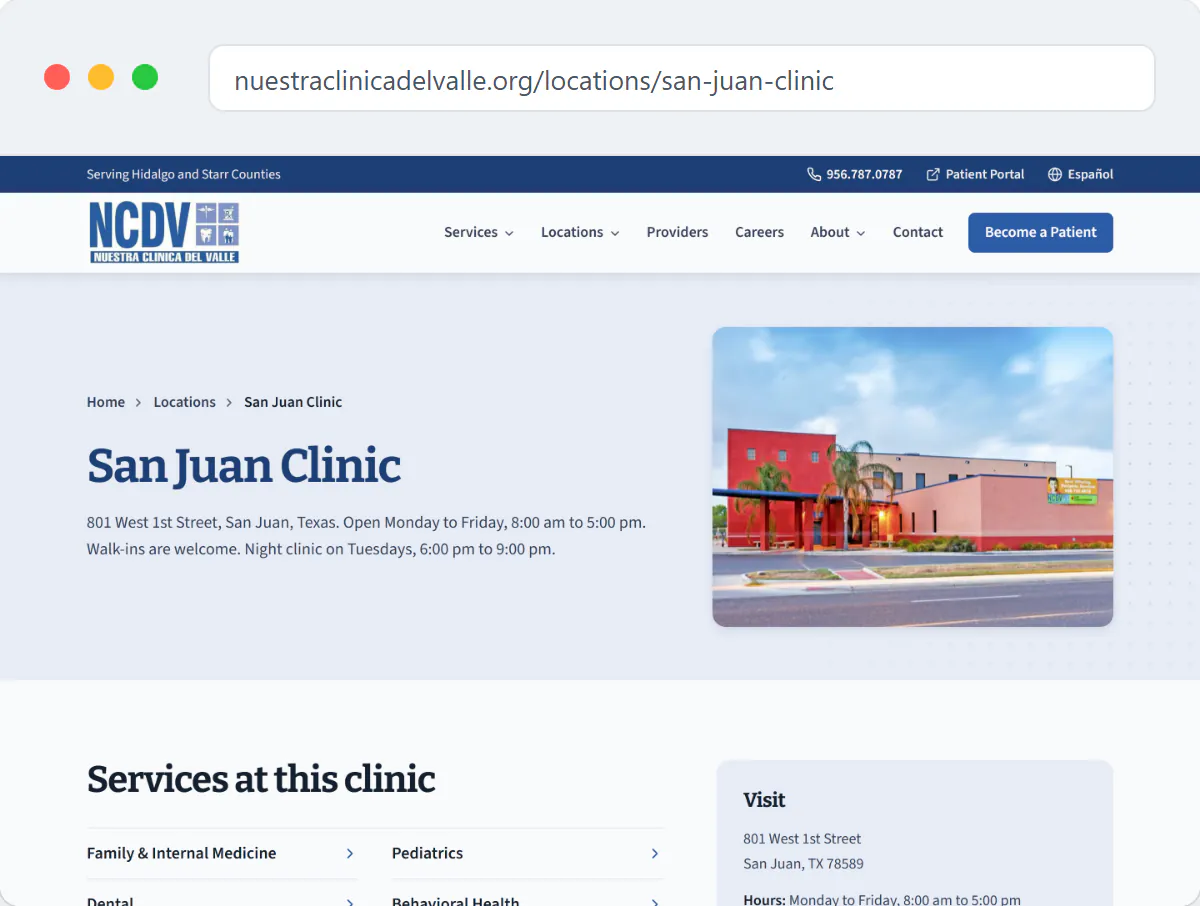 English
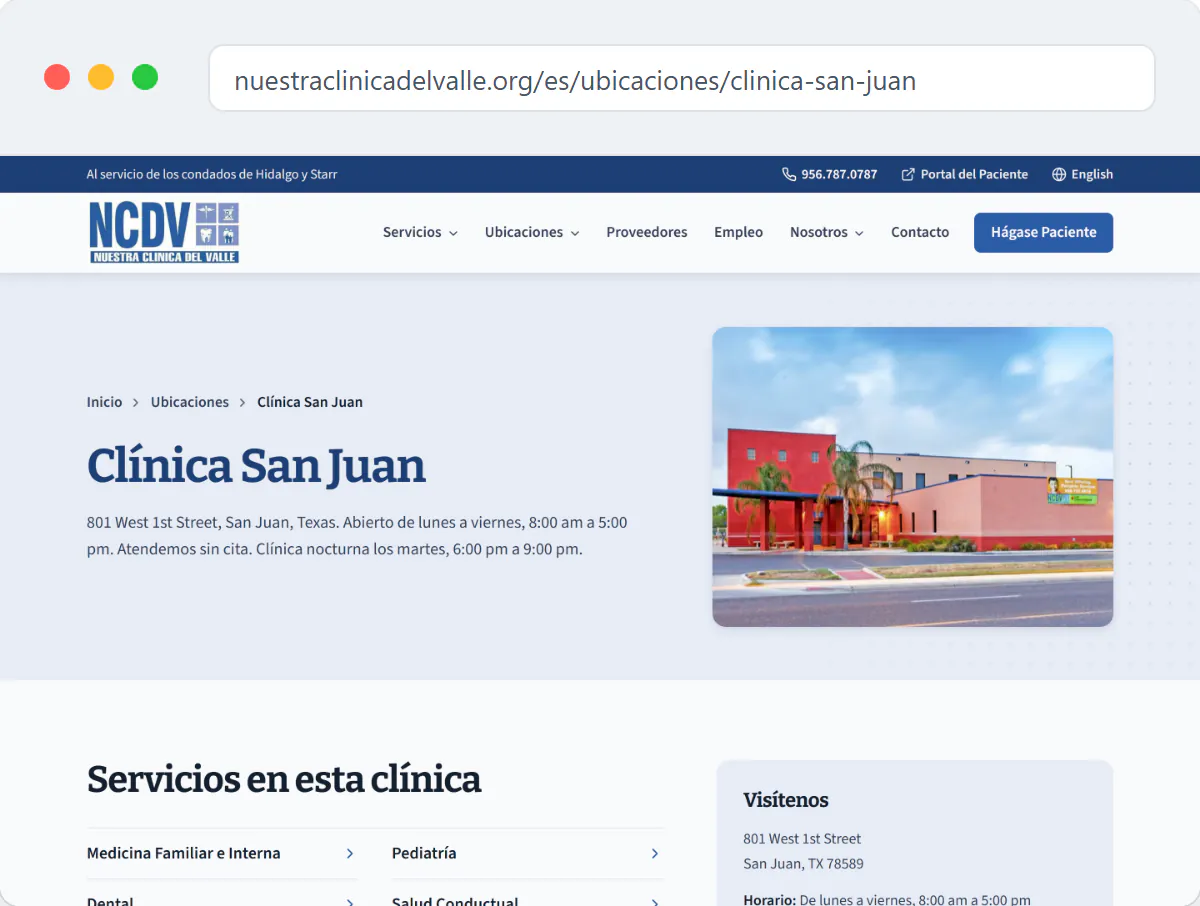 Español
Two details behind the scenes make the Spanish pages work for search engines and screen readers. Every page carries hreflang tags, short labels in the page code that tell Google which version to show an English searcher and which to show a Spanish one. Every page also declares its language, and so do the short passages of one language that appear inside the other, like the bilingual federal notice in the footer. Screen readers pick a pronunciation voice from that setting, and Spanish read aloud by an English voice is close to impossible to follow.
Finding the nearest clinic in a few taps
Most visits to a health center's website start with a practical question about where to go and when it's open. The homepage opens with three tabs for the most common searches, Find a Clinic, Find a Service and Find a Doctor, so a visitor can choose a clinic from a list, pick a service, or start typing a provider's name before scrolling at all.
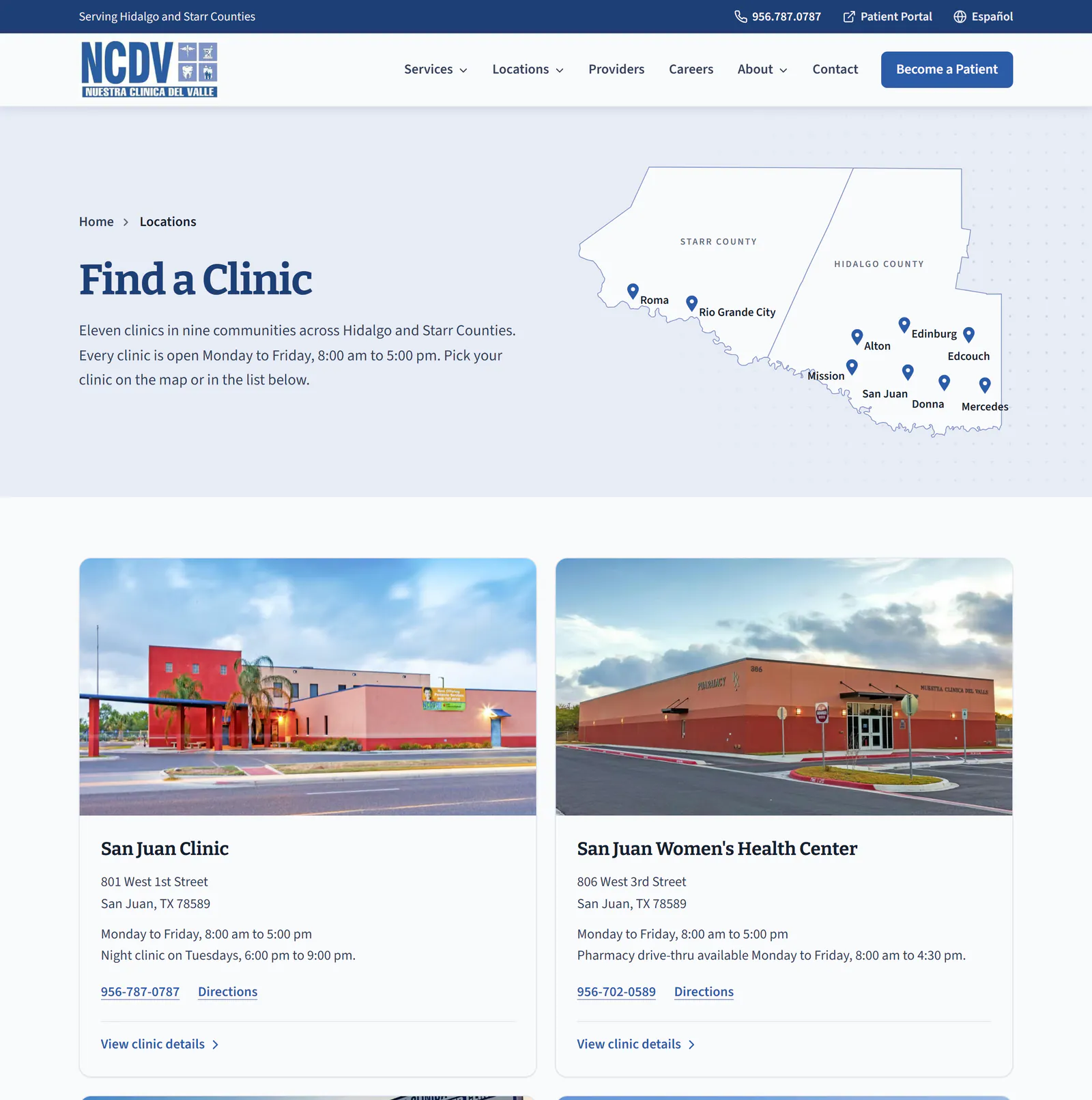
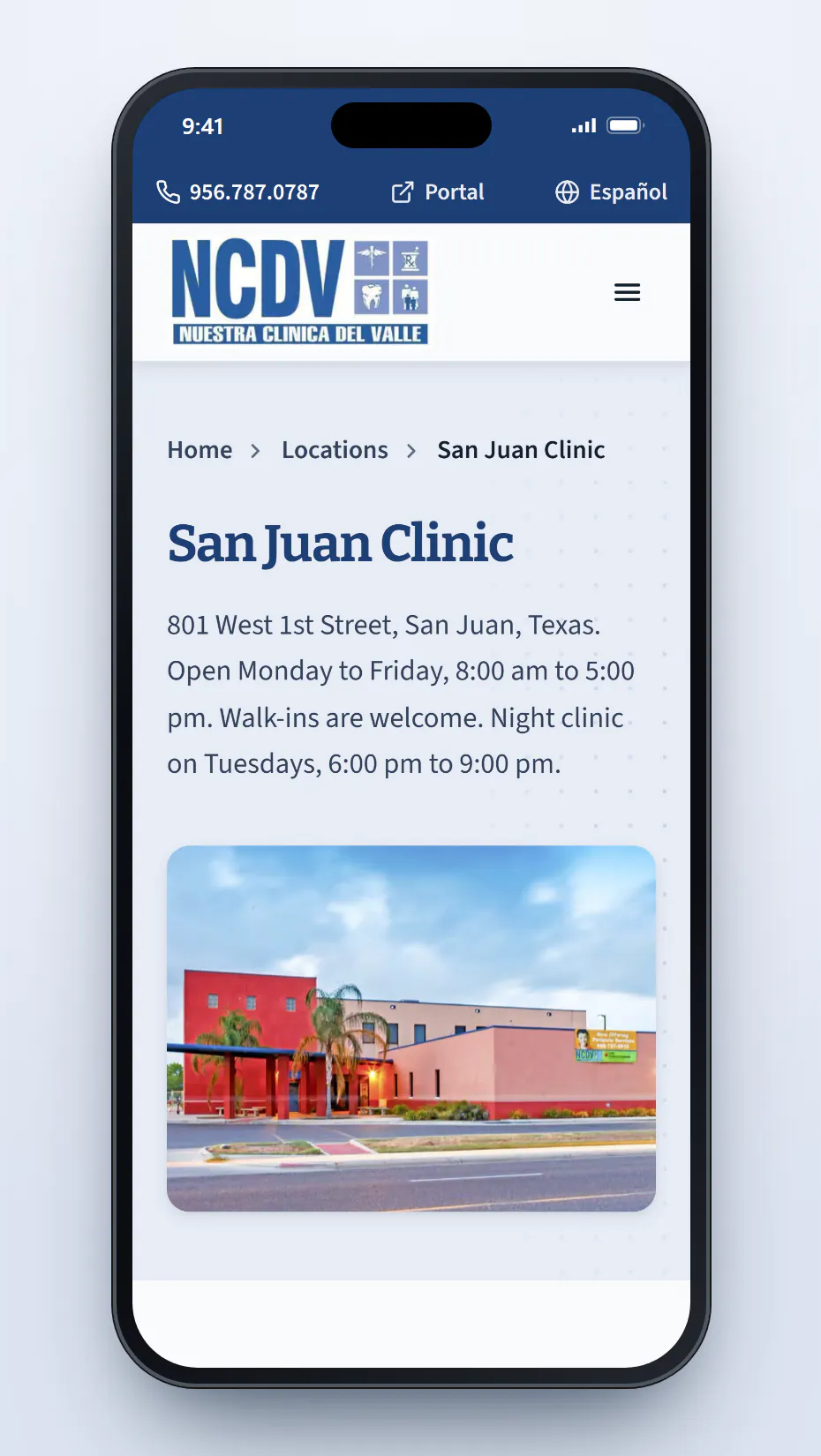
The Find a Clinic page lays out all 11 locations on a map of Hidalgo and Starr Counties drawn from U.S. Census boundaries, with a pin for each community. Below the map, each clinic gets a card with a photo of the building, the address, the hours, a phone number that places a call with one tap, and a Directions link that opens Google Maps. The cards also carry the details that matter most to patients, such as the San Juan Clinic's Tuesday night hours and the pharmacy drive-thru at the San Juan Women's Health Center.
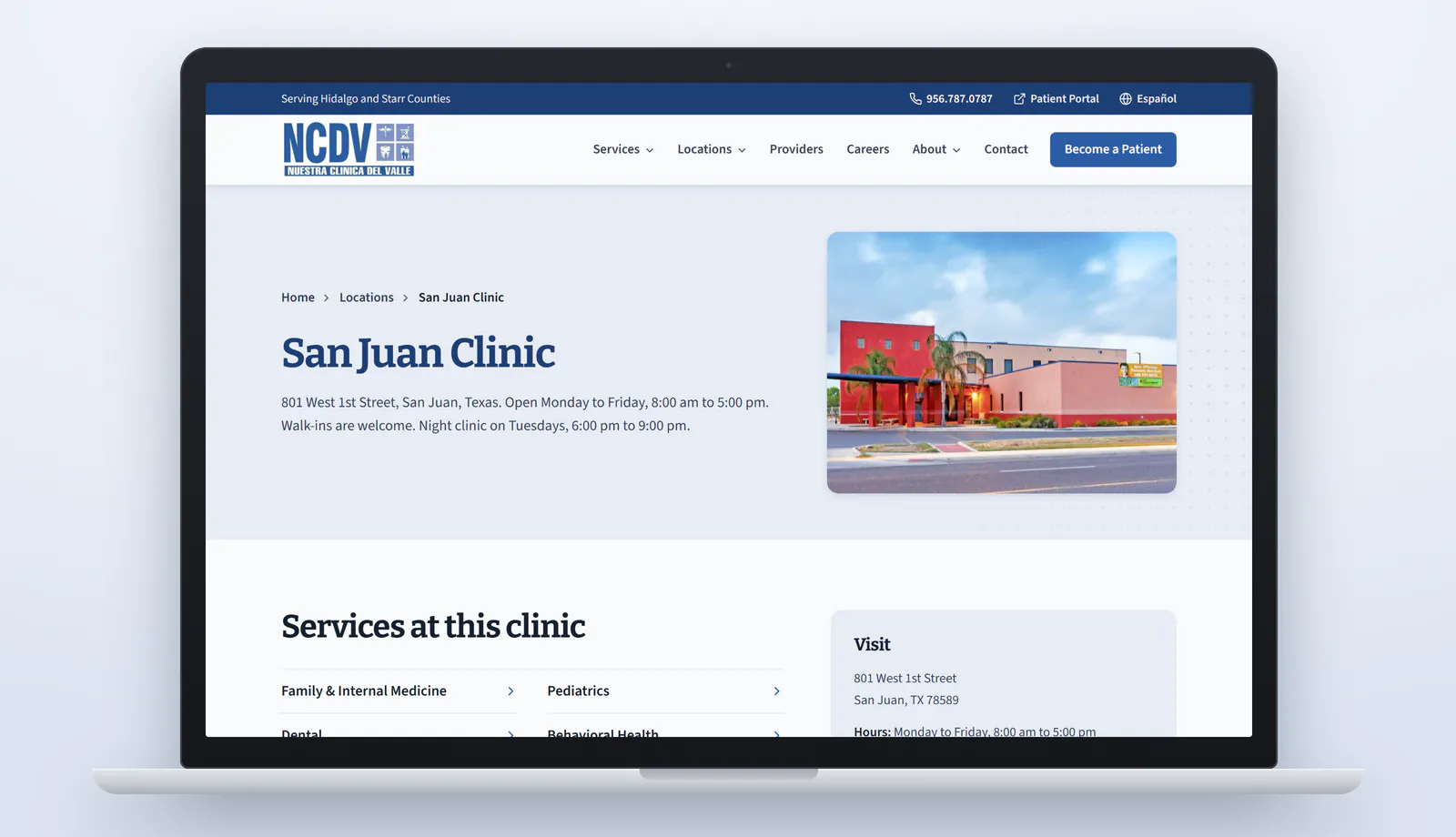
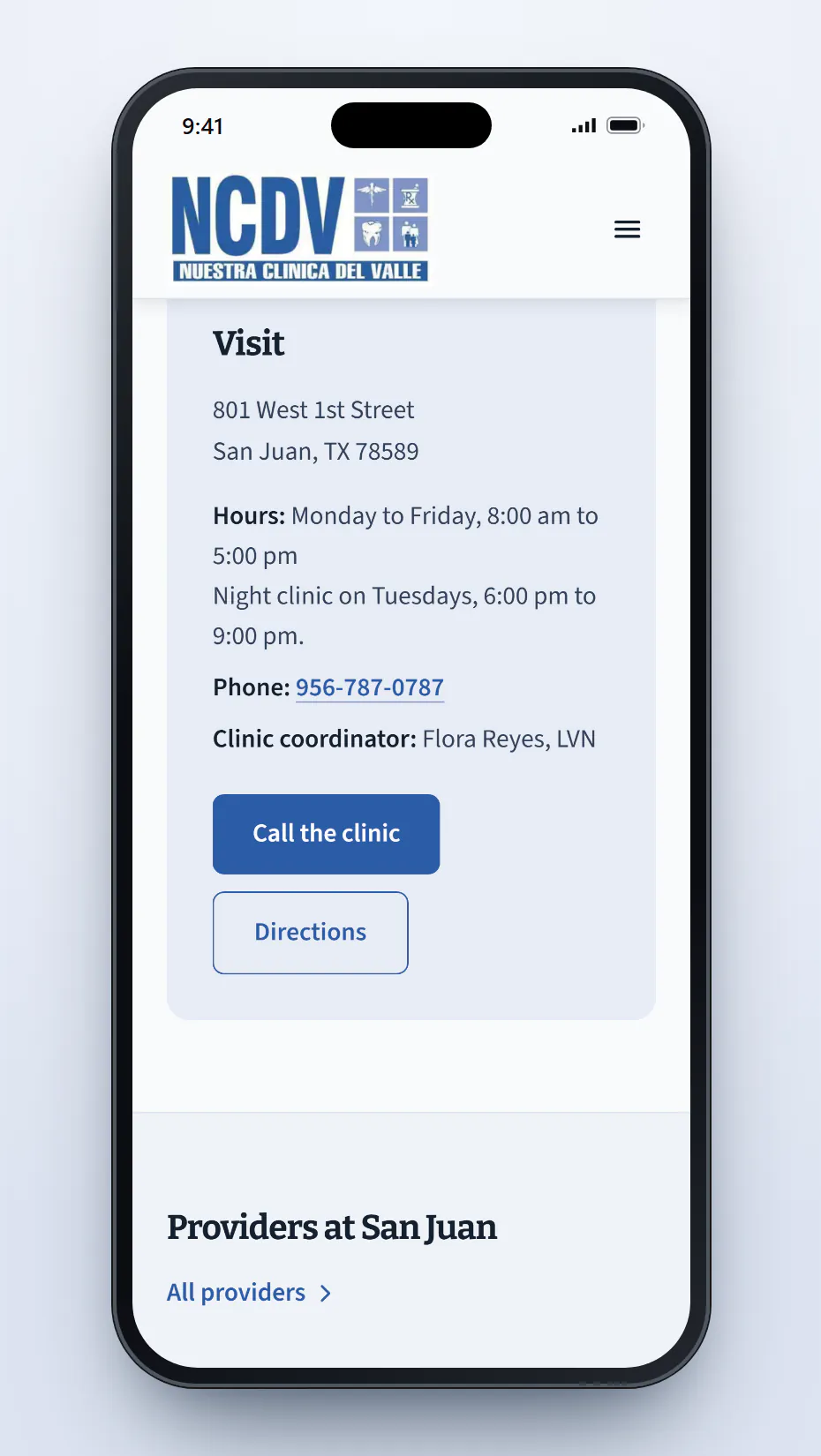
Each clinic also has its own page listing the services offered there, the providers who practice there, and the name of the clinic coordinator. On a phone, the Visit box puts the hours and two large buttons, Call the clinic and Directions, within easy reach of a thumb.
Behind each clinic page sits structured data, a block of code written for search engines that describes the clinic as a medical clinic, with its address, phone number and opening hours in a format Google can read directly. That helps the right hours show up in search results and on maps, which matters for a health center with 11 locations and a mix of weekday, evening and drive-thru hours.
 Clinic page
 Visit
A provider directory patients can search
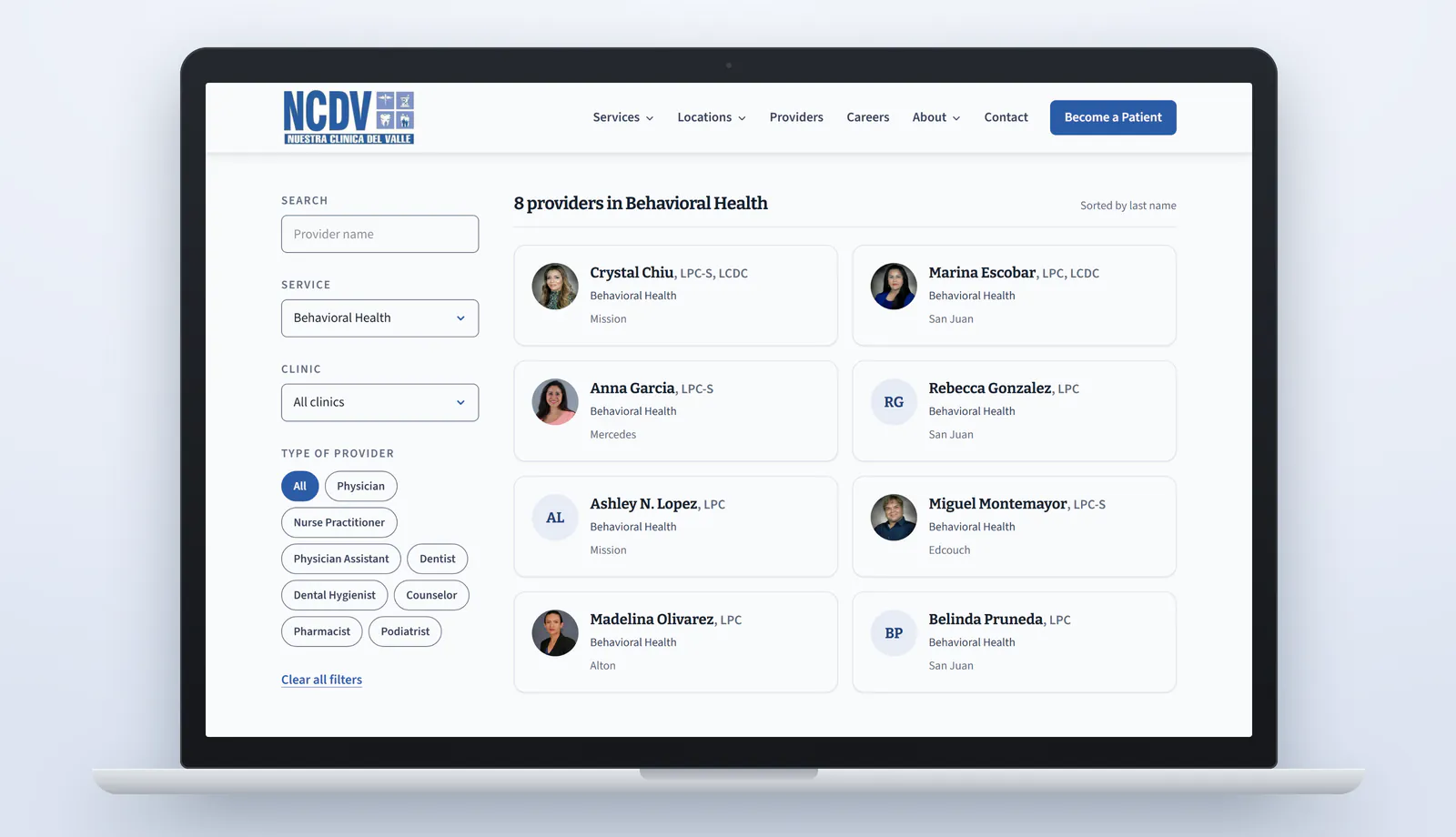
NCDV's 43 providers range from family physicians and nurse practitioners to dentists, counselors and pharmacists, and they work across 11 clinics. The Find a Provider page lists every one of them and lets visitors narrow the list by name, by one of 12 services, by clinic, or by type of provider. Results update as soon as a filter changes, and the filters are saved in the page's web address, so staff can send a patient a link that opens straight to, say, every behavioral health provider.
The directory also connects the rest of the site. Each provider has a profile page, each service page lists the providers who offer that service and the clinics where it's available, and each clinic page lists the providers who practice there. A patient can start from whichever piece of information they already have, whether that's a doctor's name, a town, or a type of care, and find the other two.
Answering "can I afford this?" before the first visit
For many patients the first question is cost. Health centers that receive federal funding offer a sliding fee discount, which lowers what a patient pays based on household income and size, and NCDV's previous site explained it in a downloadable PDF. On the new site, the homepage answers the question in a dark blue band titled "You're welcome here, insured or not," with three paths for people who need coverage, people who already have it, and people with no insurance. Each path leads into a Become a Patient section with three pages: Do I Qualify?, What to Bring, and Insurance & Enrollment.
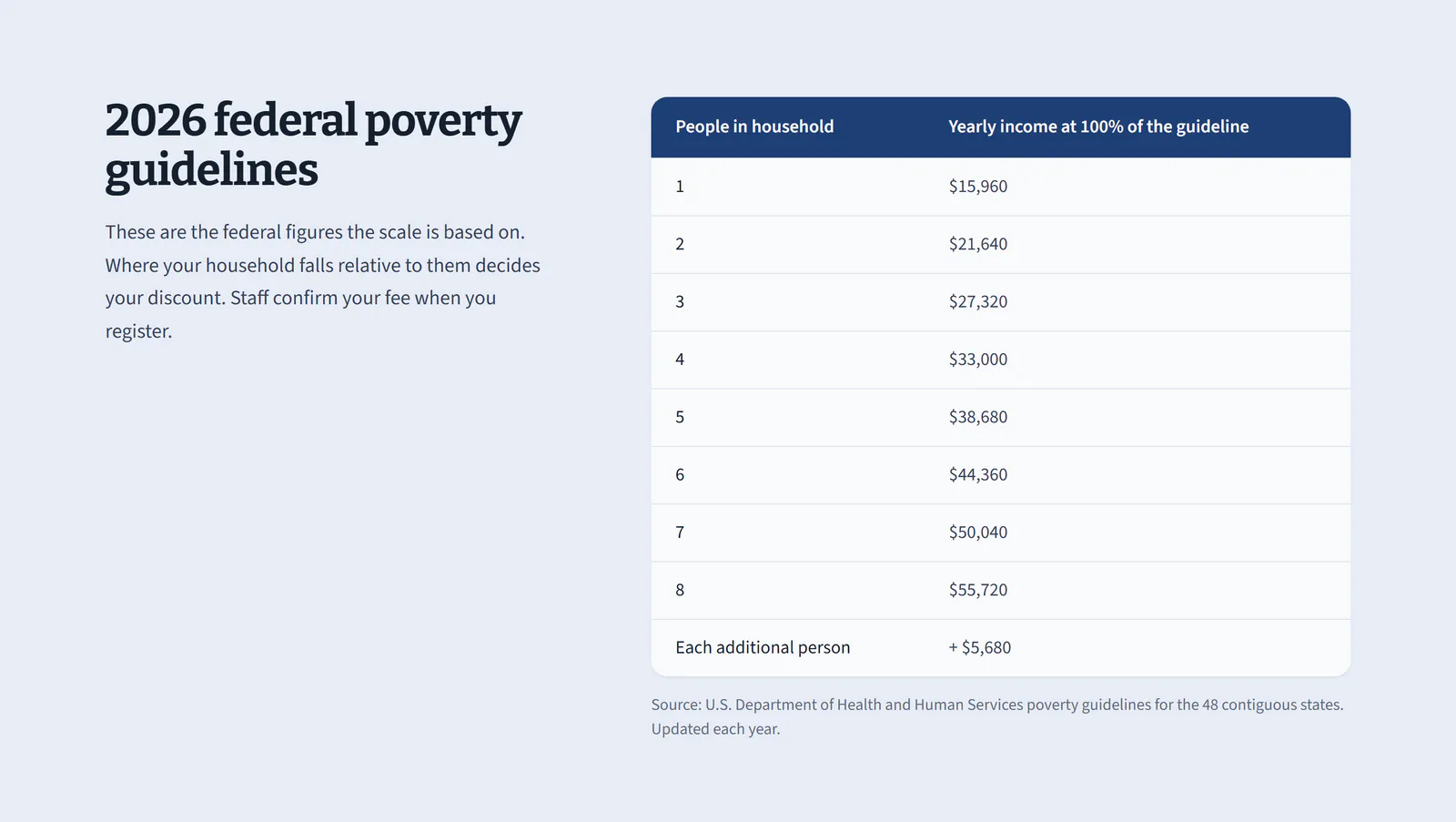
The Do I Qualify? page explains in a few short paragraphs how the scale works, what documents to bring, and that the discount is reviewed once a year. It then shows the 2026 federal poverty guidelines the scale is based on, from $15,960 for a household of one to $55,720 for a household of eight. The figures live in a single data file that feeds both the English and Spanish versions of the page, so when the government publishes new guidelines each year, the update is one change. Out-of-date numbers on a sliding fee page are a compliance problem for a health center, and keeping them in one place makes them easy to keep current.
Language access and accessibility built into the pages
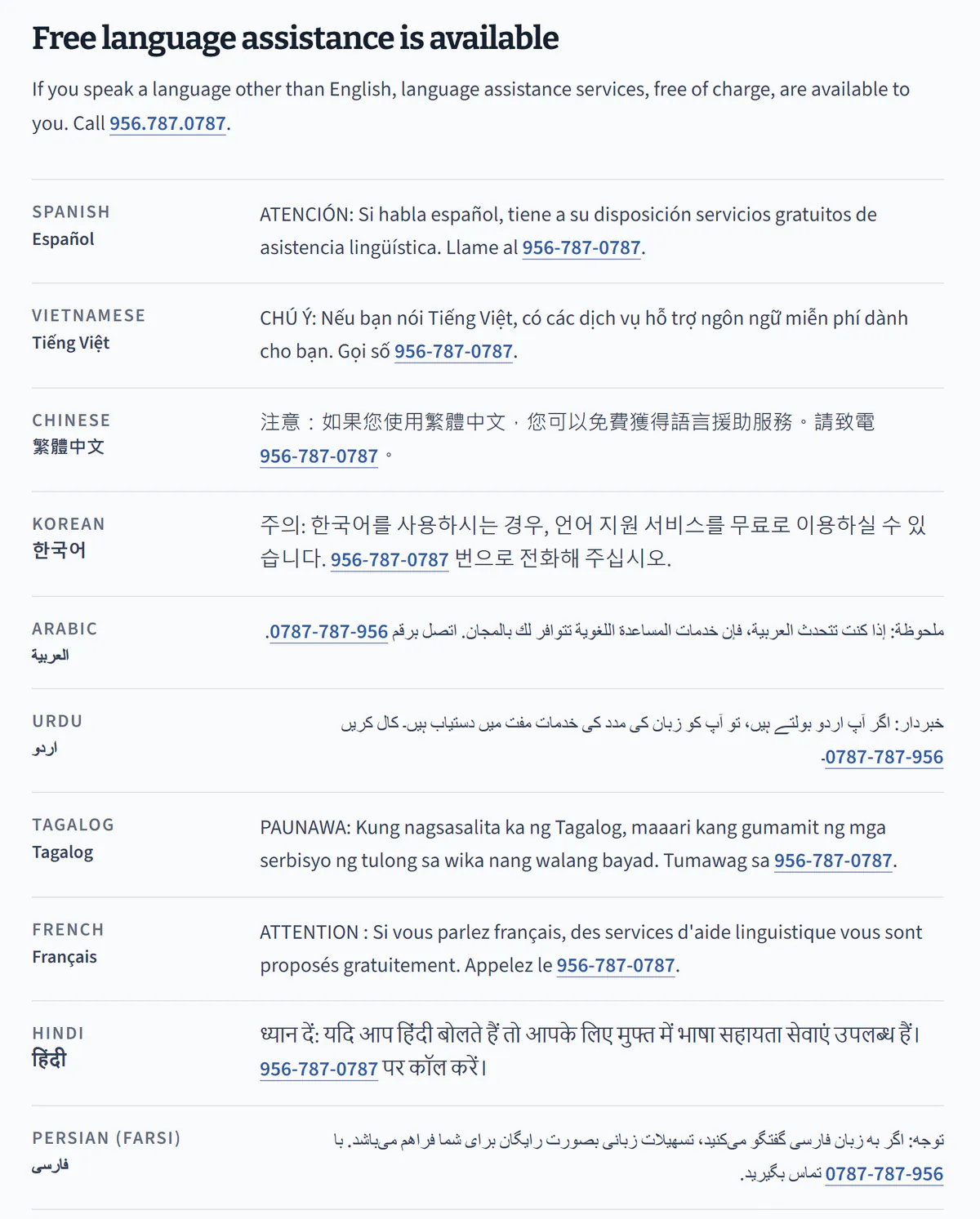
Health centers that receive federal funding have to publish certain notices, and the new site gives each one a real page in both languages. The Nondiscrimination Notice follows the Department of Health and Human Services' model notice for Section 1557 of the Affordable Care Act, the law that bars discrimination in federally funded health programs. The Language Access page explains how to get an interpreter at the clinic, by phone, or in American Sign Language, then repeats the offer of free language help in 15 languages. Arabic, Urdu and Persian run right to left, as readers of those languages expect, and the page sets the language of each line so screen readers pronounce it correctly.
The site was built to the WCAG 2.1 AA standard described in its accessibility statement. Text and form controls meet the standard's color contrast requirements, the menus work with a keyboard and close with the Escape key, nothing plays automatically, and animation switches off for visitors whose phones or computers are set to reduce motion. Screen readers announce links that open in a new tab, like the eClinicalWorks patient portal, and form errors are read aloud. The contact form asks only for contact details and a general message, and it reminds visitors not to include medical information.
Built for older phones and slower connections
NCDV's patients often browse on older Android phones over limited data plans, so performance shaped the design from the start. Headlines are set in Bitter, a sturdy slab serif that holds up well on lower-resolution screens, and body text in Source Sans 3, which covers every Spanish accent mark. The site loads only two font files up front, serves photos in modern compressed formats sized for each screen, and keeps its JavaScript to about 170 KB compressed. The county map, which is most useful on a larger screen, is left off on phones, where the clinic cards already list every location. The design keeps the familiar NCDV logo and builds its color palette from the logo's royal blue and soft periwinkle.
Moving 13 years of content without losing a link
The old site had built up search traffic over 13 years, and much of it landed directly on clinic, service and provider pages. Before launch, every old address got a permanent redirect, a forwarding notice that tells search engines a page has moved for good, to its closest new equivalent. That came to 140 redirects in all, including about 80 old announcements and 38 PDFs that search engines and other websites still linked to.
Announcements now keep themselves tidy. Staff post health fairs, awareness months and enrollment reminders in the content management system, the homepage shows the newest three, and each announcement comes down a year after its date, with its address forwarding to the announcements page. Provider profiles, job openings, and the leadership and board listings live in the same system, and every edit is saved as a new version in the site's history.
What other community health centers can take from this project
A bilingual health center website works best when both languages get the same care. Building Spanish as a complete twin of the English site, with matching pages, translated web addresses and a switch that keeps visitors on the page they were reading, means a Spanish-speaking patient never runs into a dead end. It costs more effort up front than translating a handful of key pages, and it pays for itself every time a patient finds clinic hours or a sliding fee answer without having to call.
The pages that matter most are the ones patients use to make decisions. Clinic pages with accurate hours and one-tap calling, a provider directory that can be searched by service, clinic or name, and a sliding fee explanation in plain language answer the questions that otherwise fill the phone lines. Keeping the facts that change, like hours and the year's poverty guidelines, in one editable place helps keep them accurate long after launch.
Finally, treat compliance as part of the design. The notices federally funded health centers are required to publish, along with accessibility to the WCAG 2.1 AA standard, are easier to build in from the start than to bolt on later, and with the Section 504 deadline approaching, health centers planning a redesign should make that standard part of the brief.
Nuestra Clinica del Valle's website is live at nuestraclinicadelvalle.org. Built by MPC Studios.
Working on a website for a community health center or a bilingual audience? Let's talk.
Let's work together
Ready to take your
business further?
Tell us about your project and let's create something extraordinary together.