Overview — why this Aviation Website Design matters
The new Hunt Pan Am website is a focused example of thoughtful Aviation Website Design: clean, responsive, and built to reflect the company’s operations and personality. Designed and developed by MPC Studios on Webflow, the site replaces generic visuals and clunky information architecture with an authentic, pilot-friendly experience. This walkthrough explains what changed, how the site works, and why these changes matter for Hunt Pan Am and their customers.
Homepage: immediate credibility for busy pilots
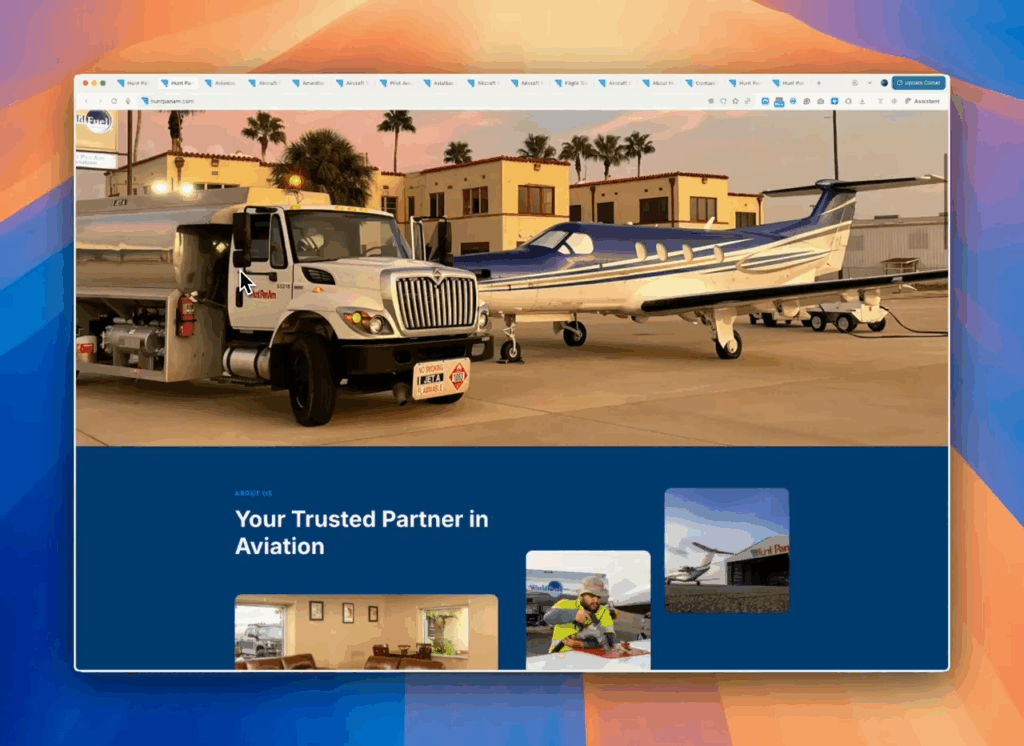
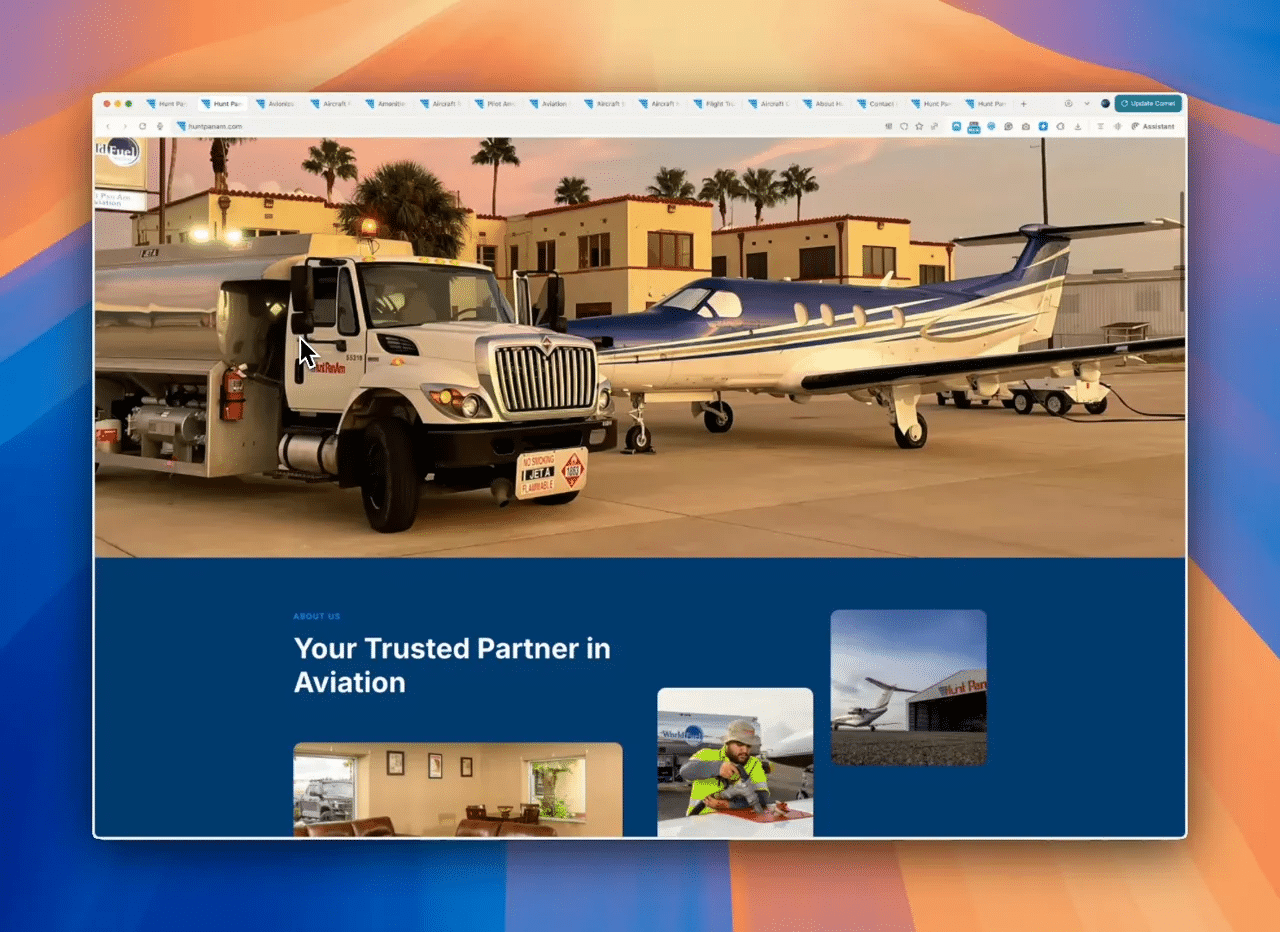
The first screen a visitor sees is often the most important — and for Hunt Pan Am that view now delivers clarity and trust. The updated banner states the core message plainly: your trusted partner in aviation. Navigation is clear and prioritized: Services, About, Contact. That hierarchy gets pilots and ops teams to the information they need without unnecessary clicks.
From an Aviation Website Design perspective, the homepage achieves two goals: it communicates competence quickly and reduces friction for users who are often on tight schedules. The layout is fully mobile responsive, so pilots checking on the ramp or flight crews using phones see the same clarity as desktop users.
Authentic photography: ditching stock for real visuals
One of the most visible upgrades is photographic authenticity. Instead of stock imagery, Hunt Pan Am supplied professional photo shoots: real facilities, real aircraft, real people. That single change raises perceived quality dramatically and makes the brand feel genuine — an essential attribute in aviation where trust and verification matter.
In practical terms, authentic photography reduces cognitive friction. A pilot choosing an FBO wants to see the ramp, the hangar, and the team they’ll interact with. Showing those assets upfront is a simple but powerful move in Aviation Website Design.
Live fuel pricing: transparency where it counts
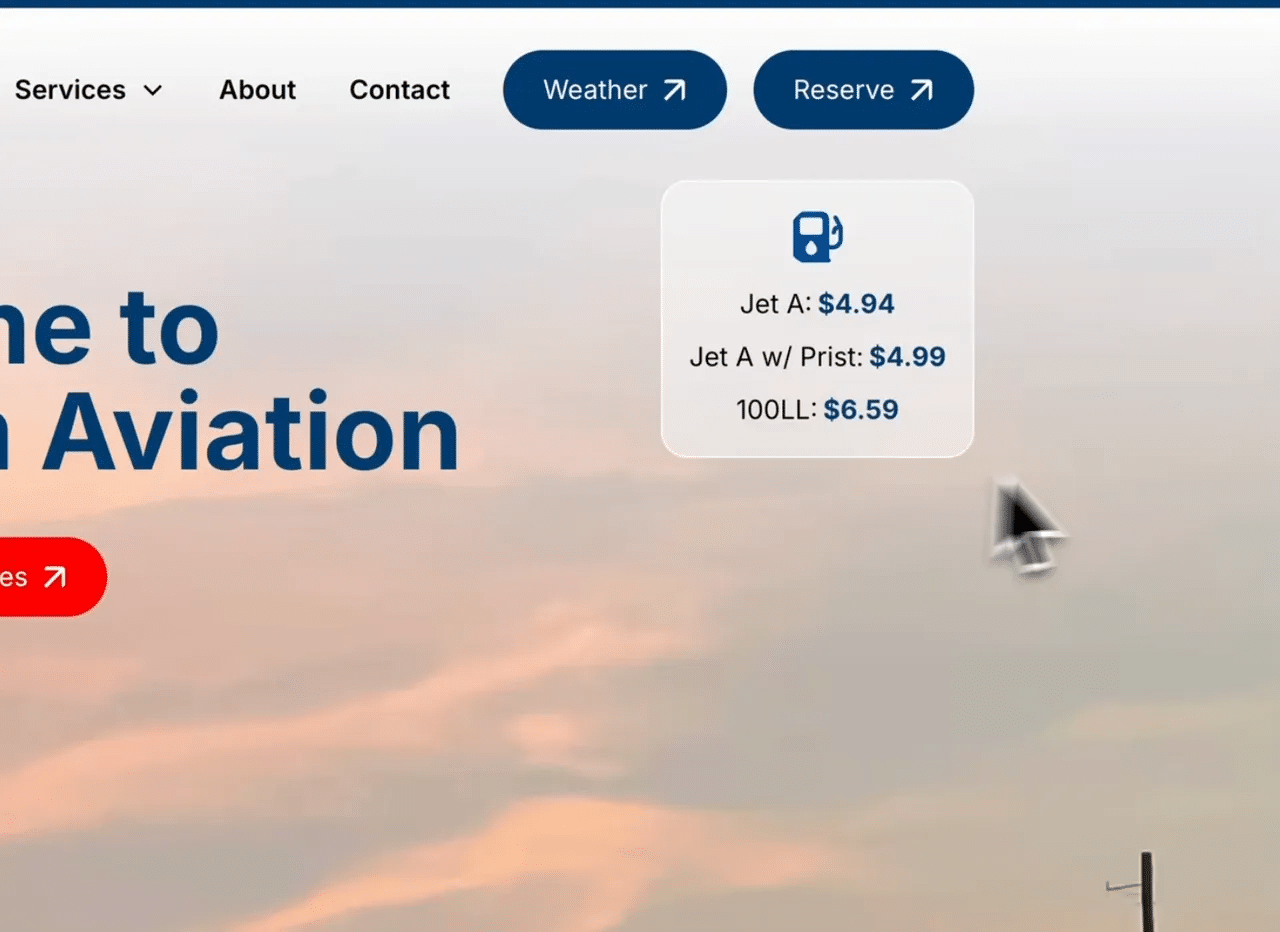
A concise fuel pricing strip visible from the top—Jet A, Jet A with Prist, and 100LL—adds operational transparency. For pilots and charter operators, live pricing is a high-value utility. It turns a marketing site into a practical tool, and it signals that Hunt Pan Am understands their customers’ priorities.
Including live prices as part of the primary layout is a small usability decision with outsized return: it shortens the decision path for visitors who are already comparing fuel costs and turnaround times.
Services section: clear cards, quick access
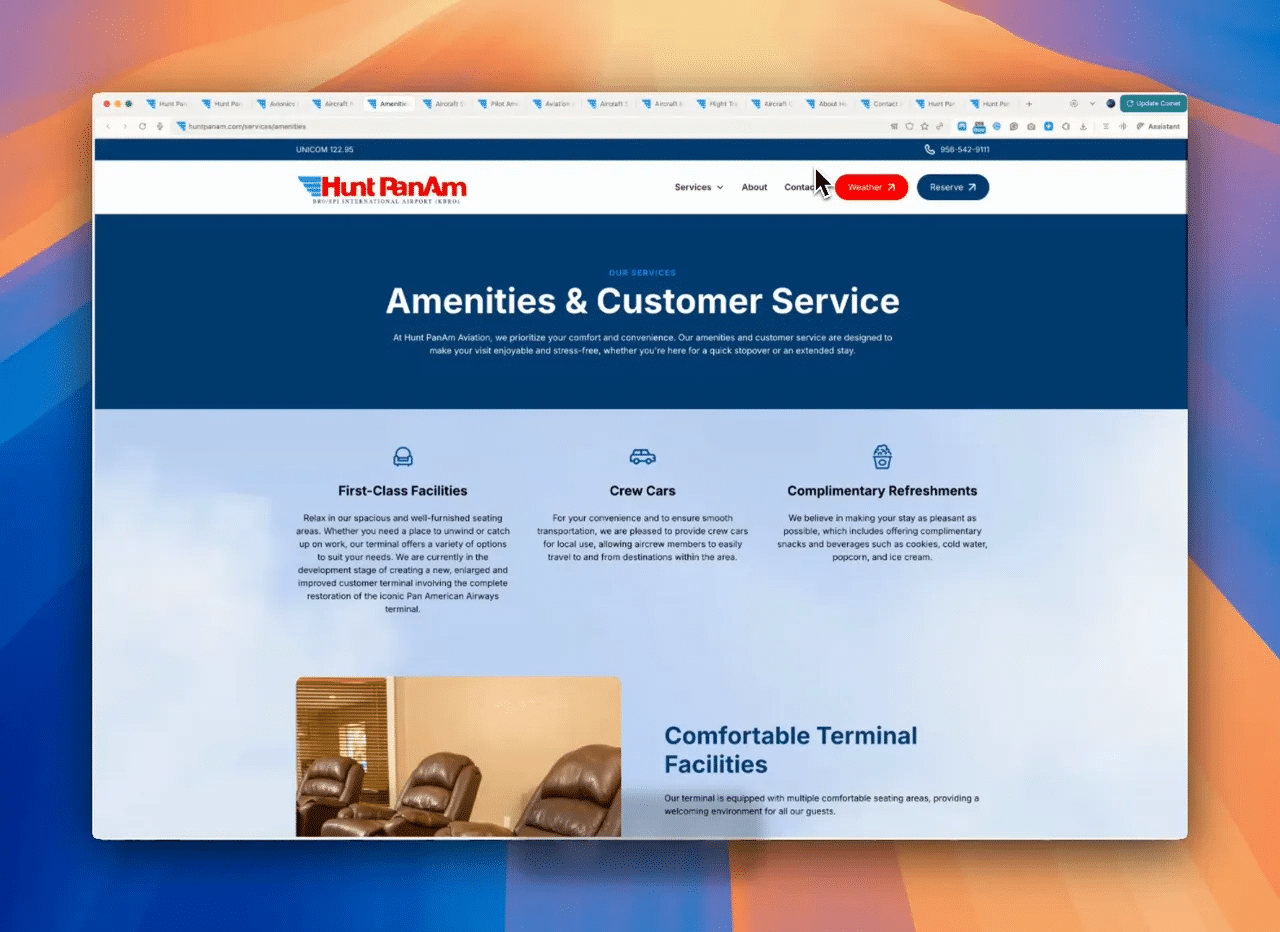
The Premium FBO Services area lays out offerings with approachable cards: Avionics, Fuel, Amenities and Customer Service, Aircraft Storage, Pilot Amenities, Latin America support, Aircraft Sales, Maintenance, Flight Training, and Charters & Management. Each card links to a dedicated detail page, which keeps the homepage uncluttered while maintaining depth for visitors who need it.
From a design standpoint this is a classic Aviation Website Design pattern: present the most common user intents as bite-sized choices, then let each card become a conversion pathway. The result: pilots, operators, and international partners find relevant information within one or two clicks.
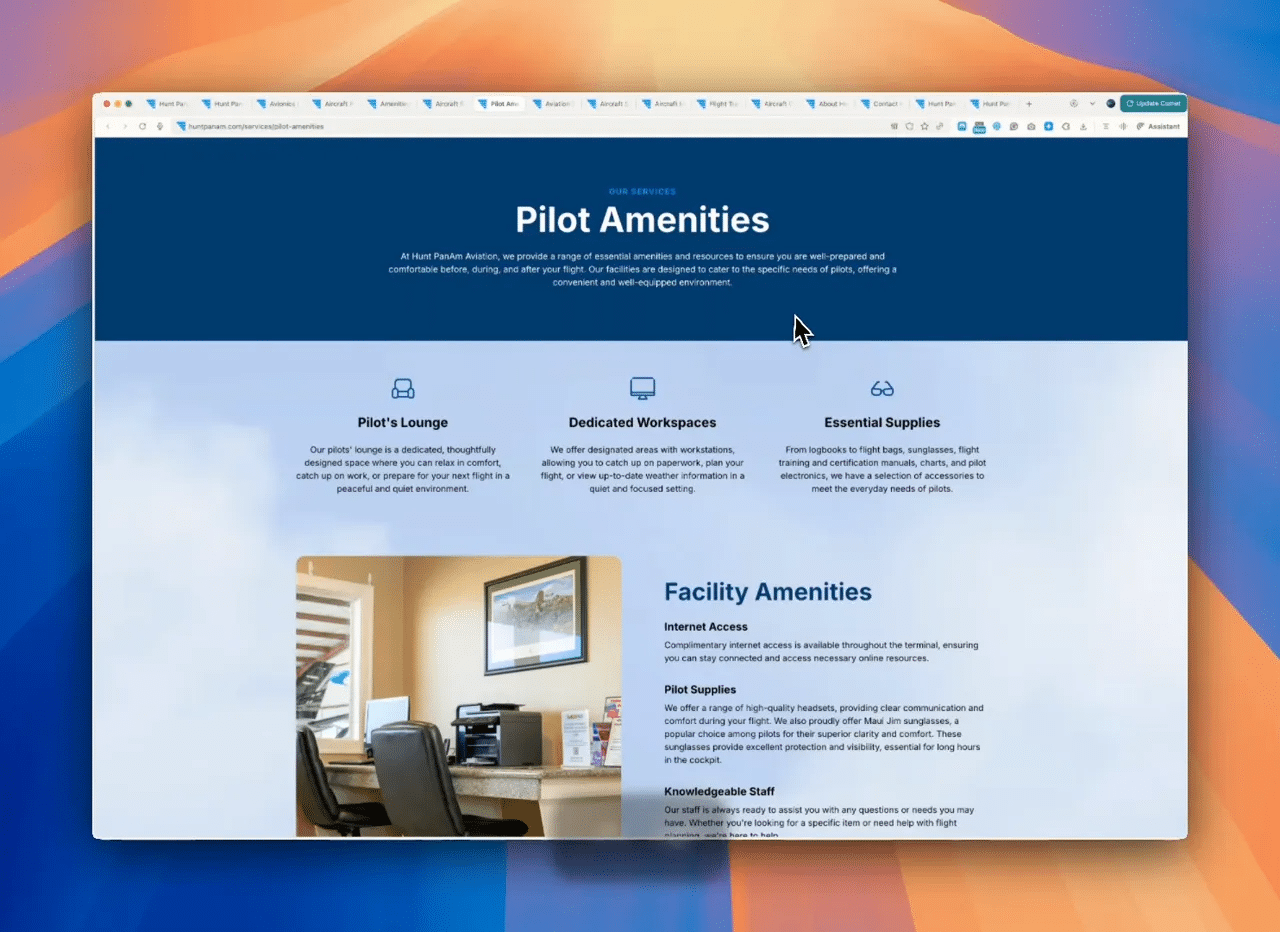
Highlighting cross-border operations: a unique selling point
A key differentiator for Hunt Pan Am is their cross-border operations throughout Latin America. The site calls that out in the services grid and on dedicated content pages. For companies that serve international flights, making cross-border capabilities easy to find is crucial — it answers a core operational question immediately.
In Aviation Website Design, emphasizing unique operational strengths (like Latin American flight support) helps turn a generic FBO listing into a strategic advantage. Hunt Pan Am’s site makes that advantage obvious.
Service detail pages: real staff, real hangar
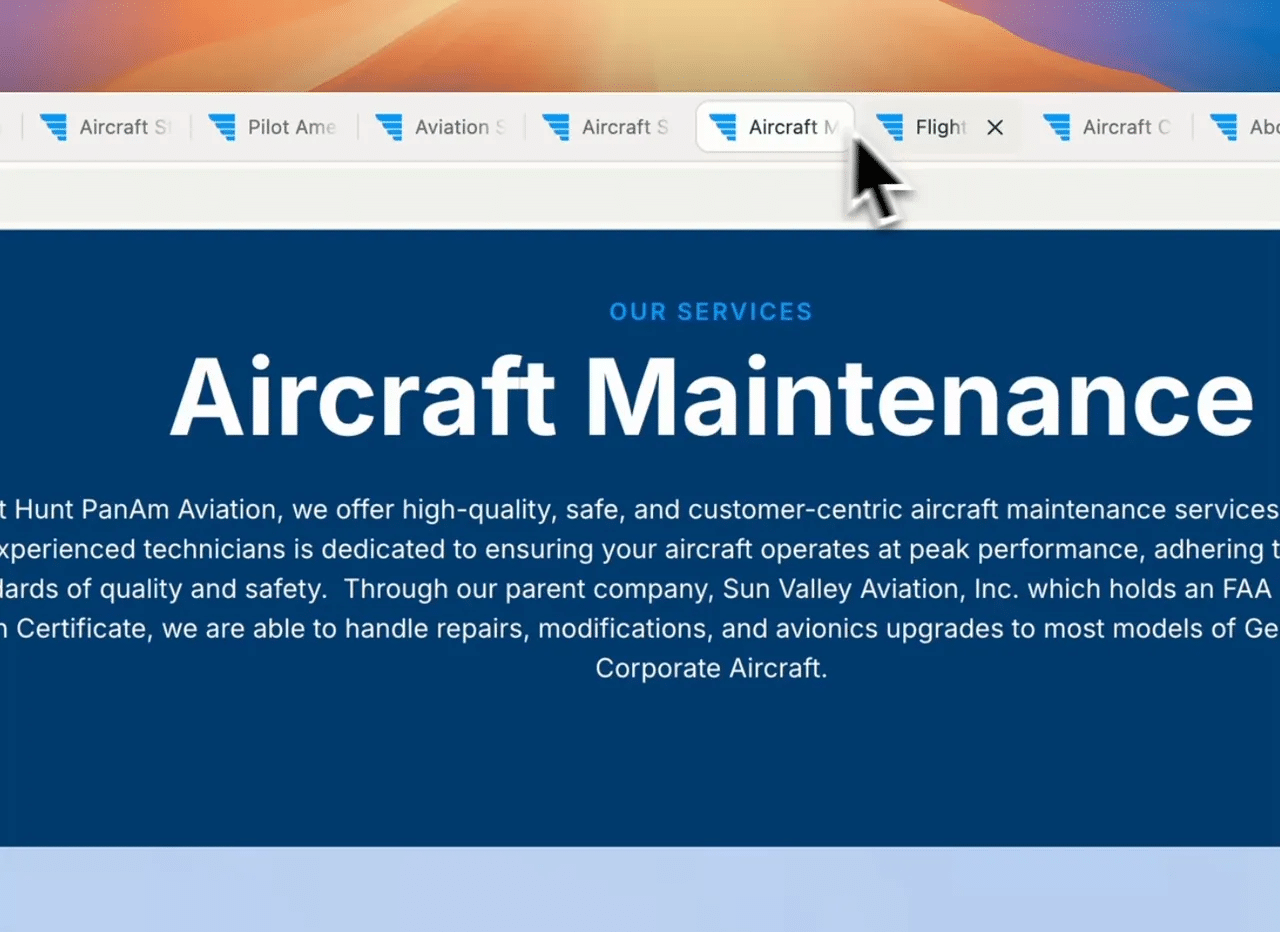
Click into Maintenance or other service pages and you’ll notice the consistent theme: real imagery and concise, benefit-focused copy. The aircraft maintenance page, for example, uses photos of the actual hangar and team rather than stock pictures, and the copy explains what customers gain — reliability, turnaround, and experience.
Good Aviation Website Design pairs believable visuals with short, direct copy that answers visitors’ “what’s in it for me?” question. Hunt Pan Am’s pages do that well: clear headings, short paragraphs, and a focus on outcomes rather than features alone.
Brand refresh: color, typography, and layout logic
The site uses refreshed brand colors and typography that align with Hunt Pan Am’s visual identity. Consistent spacing and a restrained palette make the content feel modern and intentional. These choices might seem small, but when combined they create a trustworthy impression — exactly what you want from an aviation partner.
From an Aviation Website Design perspective, visual consistency supports credibility. It’s not just about looking nice; it’s about communicating operational maturity and attention to detail.
About page: mission-forward and client-driven content
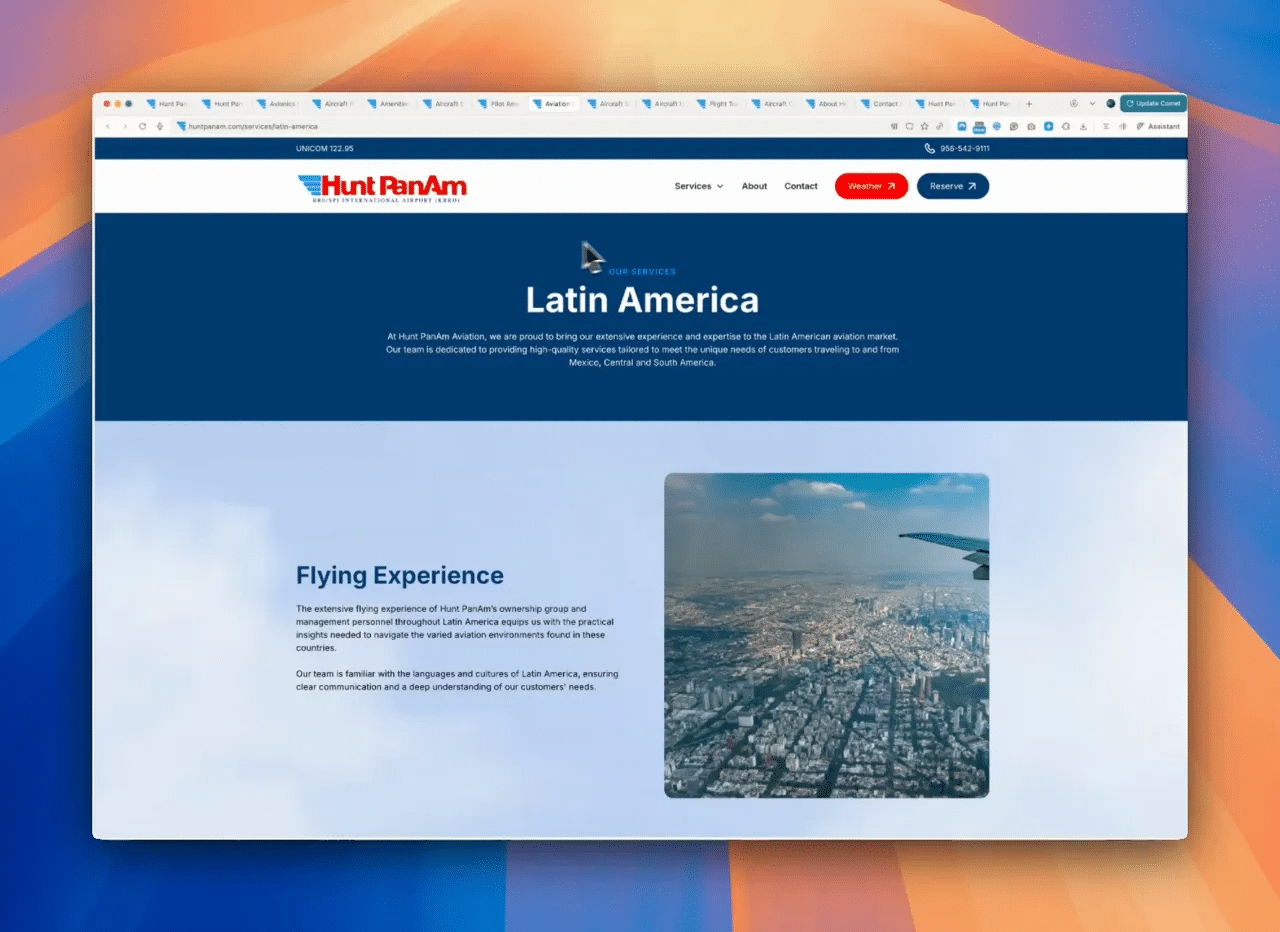
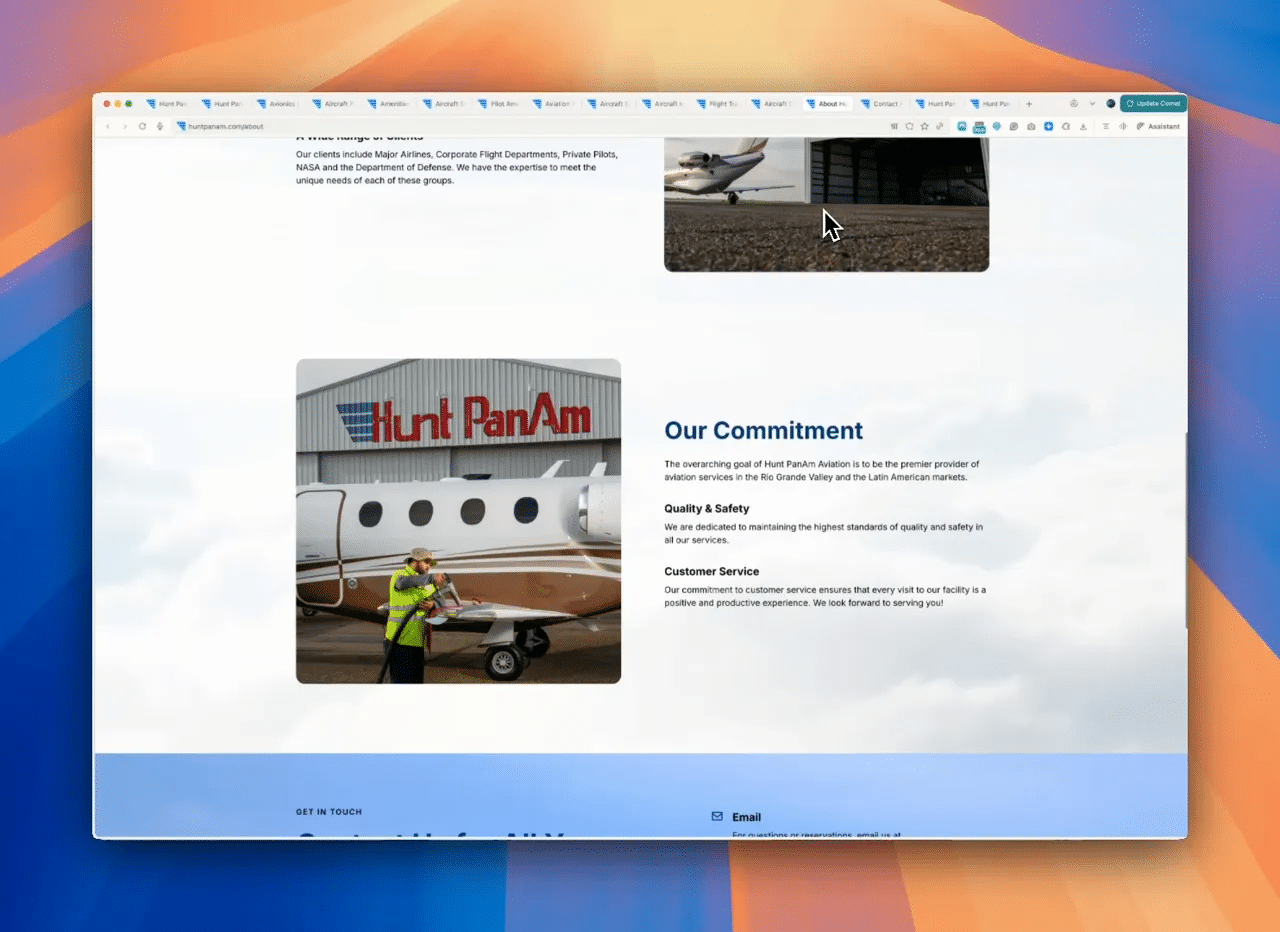
The About page follows the same pattern: real facilities, real team photos, and the mission statement up front: “Your trusted partner in aviation.” Importantly, all content on the site was client-driven. Hunt Pan Am edited and finalized every line of copy through shared Google Docs, so the voice and the facts reflect the company directly.
This client-led approach to content is a practical best practice in Aviation Website Design. It reduces revisions, preserves accuracy, and lets the client own their tone and positioning for the long term.
Testimonials and trust signals
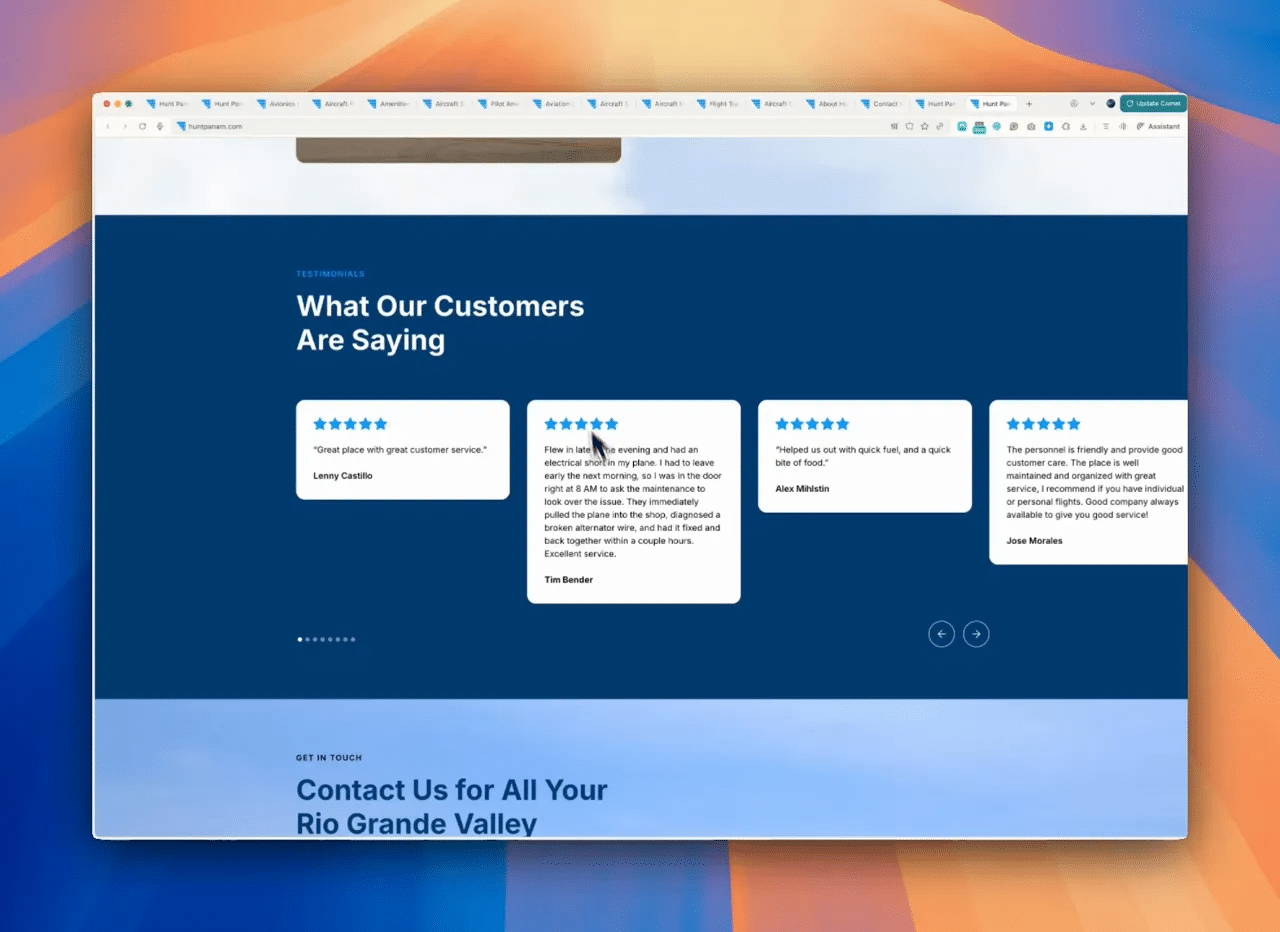
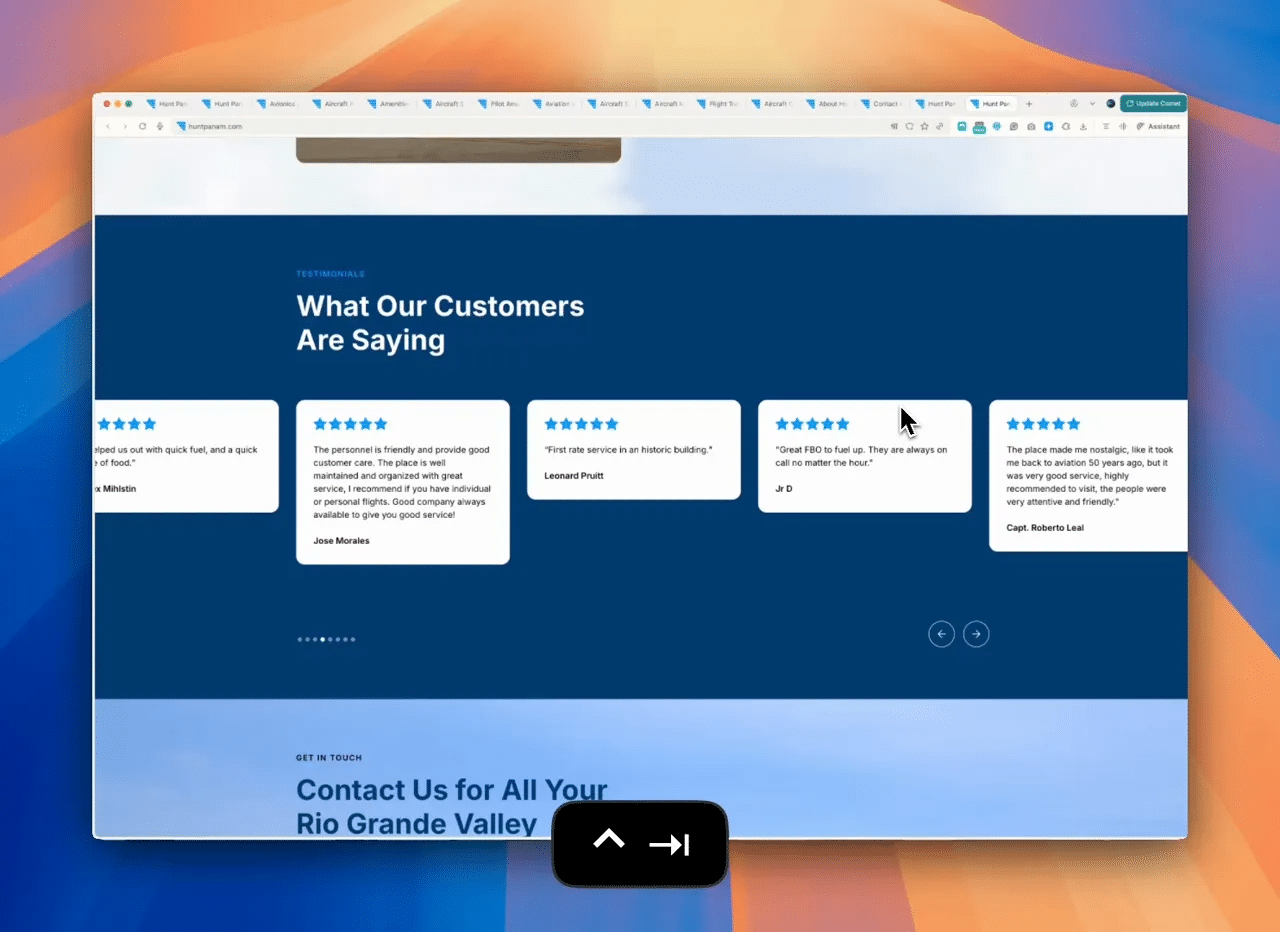
Testimonials are used to reinforce credibility. Real customer quotes describe responsive service and attention to detail; each quote is styled with matching brand accents so the testimonial module feels integrated rather than pasted in. These social proofs are particularly effective in aviation, where reliability and service reputation are deciding factors.
Site visitors can scan a few short quotes and quickly sense whether Hunt Pan Am operates with the responsiveness and professionalism they expect.
Contact and mobile convenience
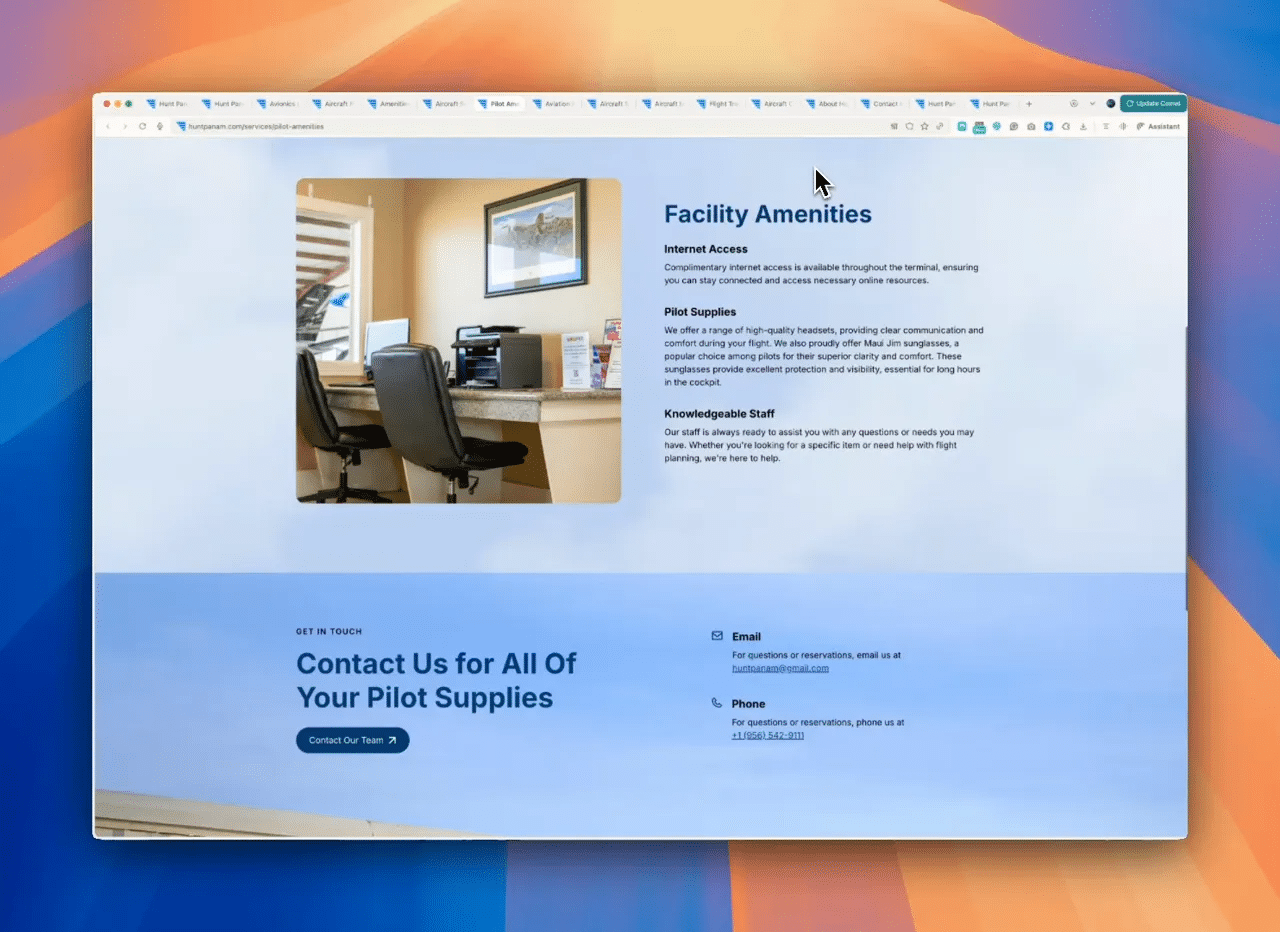
The contact page is intentionally simple: name, email, phone, topic, message, plus prominent address and phone number. For people traveling or working from the ramp, quick access to a phone number or address can make or break a call to action. The form and contact details are optimized for mobile so users can act immediately.
Good Aviation Website Design reduces the friction between intention and action. The contact module here is a textbook example: no filler, just the essentials presented clearly.

Built on Webflow: maintainable and mobile-responsive
Under the hood the site is built entirely on Webflow. That decision gives Hunt Pan Am a solid, mobile-responsive foundation and simplifies ongoing updates. MPC Studios includes support and maintenance so the site can evolve without a full rebuild.
Choosing a CMS and build platform that aligns with the client’s ability to maintain content is an important part of Aviation Website Design. A beautiful site that’s hard to update becomes a liability; Hunt Pan Am’s setup avoids that trap.
Why this project matters — outcomes, not just aesthetics
This project matters because it elevates Hunt Pan Am’s digital presence in concrete ways: authentic visuals, clearer service pathways, operational transparency, and an easier mobile experience. It clarifies what the company does best — from full-service FBO operations to Latin American flight support — and positions them as a credible aviation partner.
For MPC Studios, the site is a good example of a collaborative, pragmatic Aviation Website Design process: combining design craftsmanship with efficient workflows to produce a site that the client can own and evolve.
Practical takeaways for your Aviation Website Design
- Use real visuals: Replace stock images with client-supplied photography wherever possible.
- Prioritize essentials: Prominent fuel prices, contact info, and service links reduce friction.
- Make updates simple: Pick a platform that your team can maintain without developers for every small change.
- Call out differentiation: If you offer unique services (like cross-border support), make them obvious.
- Design for mobile-first: Many aviation users check info on the go; mobile convenience is non-negotiable.
Next steps and how to get help
If you’re considering a refresh or a new build, think about how your website supports the real operational decisions your customers make. A strong Aviation Website Design is part brand, part utility, and part trust signal. If you want to see how a strategic website refresh can clarify your brand and strengthen credibility, MPC Studios offers a free consultation at mpcstudios.com.

Frequently asked questions
Why did you prioritize authentic photography over stock images?
Authentic photography communicates trust and operational reality. Pilots and operators want to see real facilities and staff; that visual honesty reduces uncertainty and improves conversion for services like fueling, maintenance, and charters.
How does live fuel pricing improve the user experience?
Live fuel pricing saves time and answers a top-priority question for visiting aircraft. Displaying Jet A, Jet A with Prist, and 100LL prominently reduces friction and often shortens the path from visiting the site to making an operational decision.
Why build the site on Webflow?
Webflow provides a responsive foundation and an editor-friendly workflow that lets non-technical staff update content safely. This reduces long-term maintenance costs and keeps the site current without a developer for every change.
How did you ensure the copy was accurate and on-brand?
The content was client-driven: Hunt Pan Am edited and finalized every line through shared Google Docs. That ensures the voice, facts, and operational details are correct and reduces revision cycles during development.
What are the top priorities for Aviation Website Design projects?
Top priorities include clear service access, operational transparency (fuel pricing, contact details), authentic visuals, mobile-first usability, and a maintainable content workflow. Each element supports trust and conversion for aviation customers.